

In 2026, AI is being rapidly adopted in industries, including healthcare diagnostics and autonomous vehicles, as well as fraud detection and smart retail. Recent enterprise research reveals that the use of AI is no longer in the experimentation phase but has become a mainstream practice in industries. Nevertheless, there is one issue that all AI projects meet: raw data is a mess, unstructured, and cannot be used in its purest form.
Machine learning models require context to interpret images, videos, documents, audio files, sensor feeds, and so forth. It is at this point that data annotation services are mission-critical. Annotation helps AI systems to learn patterns, make decisions, and become more accurate over time by converting unstructured datasets into labeled, model-ready intelligence.
There is a direct relationship between the quality of annotation and the ability of AI to perform well in the real-world setting in 2026. Reliable labeling is the basis of trustworthy AI systems, whether it comes to computer vision, NLP, or predictive analytics.
What Are Data Annotation Services?
Annotation of data involves labeling unstructured data, including images, text, audio, or video, so that AI and machine learning algorithms can identify patterns and learn by example.
As an illustration, medical scan annotators can label a scan to identify tumors, an autonomous driving system can label pedestrians, or an online review annotator can label reviews based on sentiment. These labels assist models in knowing what they are viewing or reading.
In the machine learning lifecycle, annotation is a cornerstone when training, validating, and improving. Improved labeled datasets result in enhanced pattern recognition, reduced false positives, and much better model accuracy.
Simply put, AI models can be as good as the data they are trained on.
Which Industries Are Using Data Annotation Services the Most?
1. Healthcare - How Is Data Annotation Transforming Medical AI?
Data annotation in healthcare is one of the rapidly expanding applications. The quality of X-rays, MRIs, CT scans, pathology slides, and clinical notes is critical in AI model development.
Indicatively, the presence of tumor boundaries on MRI images can assist AI systems in detecting early-stage cancers more accurately. Clinical text annotation is also used to aid automatic diagnosis, patient risk scoring, and quicker claims processing.
The outcome is better diagnostics, faster disease detection, and less workload for the medical professionals. Medical AI is expected to keep scaling in 2026 due to improved reliability of life-critical decisions through annotation.
2. Automotive – Why Is Annotation Essential for Autonomous Vehicles?
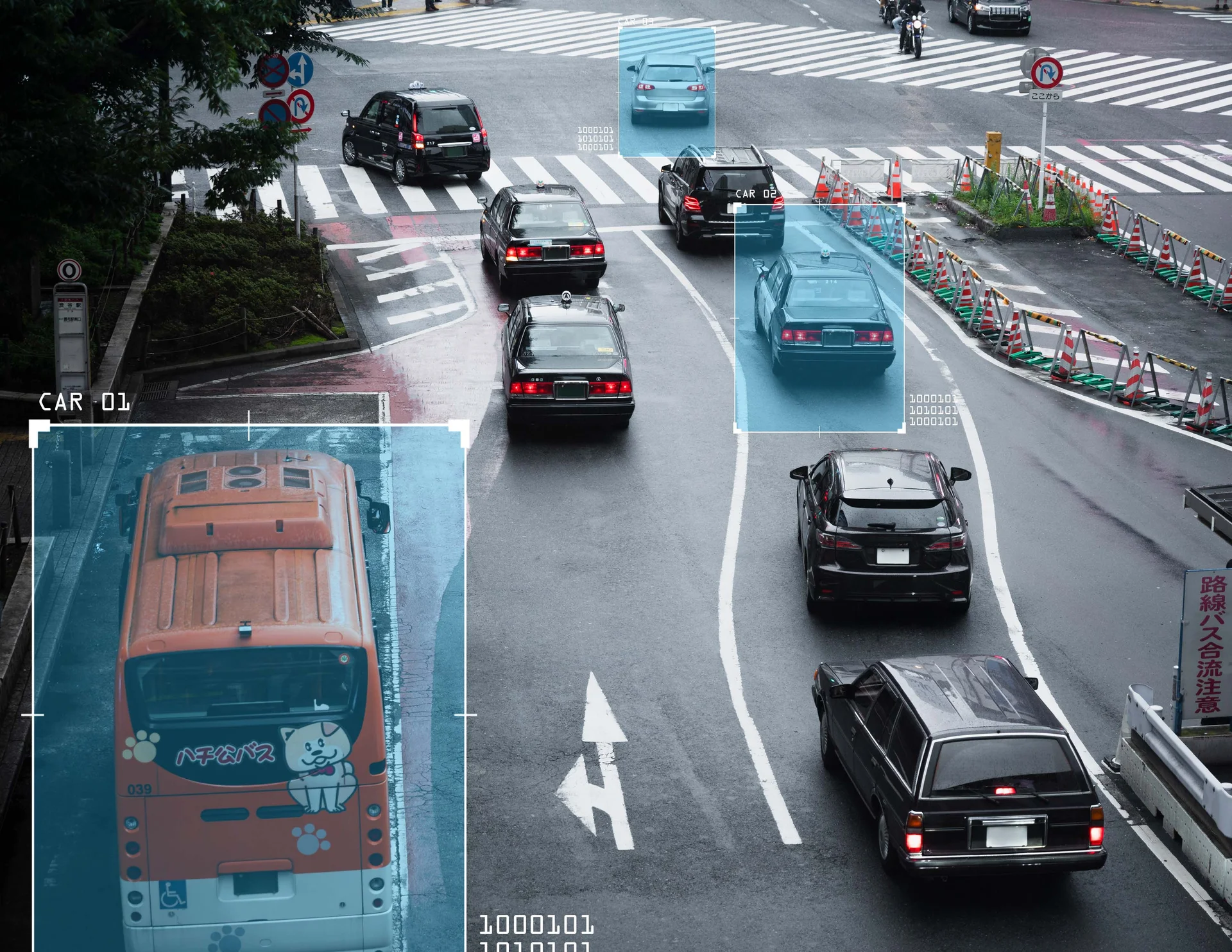
The innovation of autonomous driving is supported by automotive data annotation. Annotated video, LiDAR, and sensor data are required to help the self-driving systems identify vehicles, pedestrians, traffic signs, road edges, and lane markings.
Use cases include:
- Object detection
- Lane detection
- Pedestrian tracking
- 3D cuboid labeling
- Traffic behavior analysis
As soon as AI models are trained with accurately labeled driving datasets, vehicles can make safer real-time decisions. This has a direct enhancement on collision avoidance and the accuracy of navigation.
In 2026, autonomous cars will rely on millions of marked-up frames to operate safely in real-life traffic conditions.
3. eCommerce – How Does Data Annotation Improve Product Discovery?
E-commerce product tagging plays a crucial role in digital commerce to enhance search, personalization, and recommendation engines.
Product image labeling, category tagging, attribute extraction, and visual similarity mapping are the AI systems that enhance product discovery. To illustrate, in case a customer posts a photo of shoes, the visual search AI will suggest similar shoes based on the annotated catalog data.
This improves:
- Search relevance
- Personalized recommendations
- Cross-selling accuracy
- Catalog organization
- Visual search performance
In the case of brands competing based on user experience, annotation has a direct effect on the conversion rates.
4. Retail – How Are Retailers Using AI Data Labeling?
AI data labeling helps retailers to enhance supply chain performance and store intelligence.
Shelf images and annotated CCTV feeds can assist with:
- Inventory tracking
- Smart shelf monitoring
- Footfall analysis
- Customer movement tracking
- Queue optimization
These insights can be used to forecast the demand and enhance customer experience. Using labelled visual data, an example of an AI-controlled smart shelf is able to detect low stock levels in real time.
With an automated retail environment, annotation assists in turning raw video and image feeds into actionable insights.
5. Finance – How Does Data Annotation Power Fraud Detection?
Fraud detection and compliance systems of financial institutions are trained on annotation.
Typical applications are:
- Transaction labeling
- Suspicious activity classification
- Loan document classification
- Identity verification datasets
- Risk scoring inputs
As an illustration, transaction histories with labels can assist the AI in determining suspicious spending behaviors, which can signify fraud. KYC, underwriting, and validation of claims are also enhanced through document annotation.
It has the following advantages: it is more efficient in preventing fraud, enhancing compliance, and providing more precise risk analysis.
6. Agriculture – How Is AI Annotation Improving Farming?
AI is quickly being embraced in agriculture with the use of drone imagery, IoT sensors, and satellite monitoring.
Annotated crop images enable AI to identify:
- Pest infestations
- Leaf diseases
- Water stress
- Soil anomalies
- Crop maturity levels
This enhances the prediction of yield and allows early intervention. As an illustration, AI can detect fungal disease of crops based on the images taken by drones marked by agricultural specialists.
In precision farming, annotation is used to convert aerial images into actions that enhance the efficiency of the production of food.
7. Security & Surveillance – How Is Annotation Used in Public Safety?
Annotated video datasets are becoming more commonly used in security systems to perform real-time surveillance.
Use cases include:
- Facial recognition
- Behavior detection
- Suspicious object identification
- Crowd movement analysis
- Intrusion detection
In this case, annotated videos can be used to identify a suspicious bag or a suspicious behavior by a person in a crowd by smart surveillance systems.
This increases the level of security among people, decreases manual surveillance, and also improves the response time in case of an emergency.
Read more blog : Data Annotation Services: Types, Tools & Use Cases
Why Should Businesses Invest in Data Annotation Services?
The AI benefits of annotation can be measured by the businesses that invest in it:
- Enhanced model accuracy - A more intelligent AI is made with superior labels.
- Quick times to market - Accelerates training and deployment.
- Scalability - Supporting multi-million records in formats.
- Cost-efficiency - Less expensive than developing big in-house teams.
- Competitive advantage - AI maturity is faster than that of slow competitors.
As there are enterprise-scale providers of 50M+ annotations/year, outsourcing is now both fast and accurate.
How to Choose the Right Data Annotation Partner?
The appropriate partner must be able to provide:
- Powerful multi-level quality control
- Industry-specific domain expertise
- Large scalability and turnaround
- Good data security and compliance
- Adaptable workflows and tailored solutions
FiveS Digital has a history of 16+ years of experience, a workforce strength of 3,500+, multilingual and domain proficiency in healthcare, automotive, retail, BFSI, and agriculture.
Conclusion - Unlock AI Potential with the Right Data Annotation Services
With the continued penetration of AI in 2026, data annotation services are becoming a necessity in the healthcare sector, automotive, e-commerce, retail, finance, agricultural, and public safety sectors. Labeled data with high quality enhances the accuracy of the model, increases deployment speed, and allows real-world AI performance at scale.
The type of partners that businesses require to succeed in AI faster are annotation partners that are quality, fast, secure, and industry-experienced. Trust FiveS Digital with high-quality, scalable, and business-focused data annotation solutions that can be trusted to deliver your AI projects to production with confidence.